Jim Cogley’s Reflections: Tues 16 Dec Mon 22 Dec 2025
For ordering Wood You Believe books go to jimcogley.com
Services are usually daily 10am. Sunday 11am. Webcam: ourladysisland.ie
Updates on seminars and retreats will be posted early in New Year.
Tues 16th Dec – Spirituality V Religion
As shocking as it may seem to some it is entirely possible to be utterly sincere, live a very good, morally upright, respectable religious life and have absolutely no spiritual awareness. Even as a deeply religious person, I can be engaged in a form of religious consumerism. This is where I believe that my faith practices, all the prayers I say, the effort I put in, and all the good deeds that I do will make me happy and more loved by the God I believe in. This belief was very prevalent at the time of Christ with the Pharisees who believed that by their virtues, good deeds and religious practices they were a cut above the rest and on a highway to heaven (with very little other traffic!) Christ, in no uncertain terms denounced and exposed them as hypocrites. This was a term from acting and literally meant someone who wore a mask, who was not real and who they made themselves out to be. External observances meant nothing to him, it was the state of the heart that he looked at.
Wed 17th Dec – Ego-based Religion
Wherever the ‘I’ is at the centre of our lives and not Christ we have ego-centred religion. This has been rampant and still is. It requires a lot of struggle, will-power and effort. It requires no end of dedication and discipline, and it is full of sincerity and commitment. Still, while it masquerades the true reality, it is not even an approximation of it. It has much going for it except the one essential element it totally lacks is surrender. This is anathema to the ego that prides itself on its achievements and wants to take the credit for every arduous step on the road to sanctity. The ego is really the architect of the self-made Christian. It is not someone who has allowed themselves to be found by God in weakness and humility but rather someone who has never faltered or deviated from the straight and narrow. After a lifetime of high approval ratings, the ego earnestly believes that after all its heroic efforts it has earned an eternal reward. The fact that Christ wasn’t needed didn’t really matter.
Thurs 18th Dec – Embarking on the Path
At the deepest level of our being we all want to feel okay; we want to have a sense of peace and wellbeing; we want to feel worthwhile and valued. In short, we want to feel loved. The problem is where do we look for it, within or without? All advertising is geared towards having us fixated on an outer search and this is what we buy into from day one and it may take a lifetime to realize that ‘all things are with more spirit chased than enjoyed’ (Shakespeare). The nice car, the latest watch, the new phone are all nice but once we have them, do they add anything to our sense of self-worth? In many ways our constant quest to acquire more and more has the opposite effect and leaves us far removed from our centre. It is the realization that we are constantly running after what we want, and away from what we don’t want, that enables us to take our first step on the spiritual path.
Fri 19th Dec – The Parallel Church
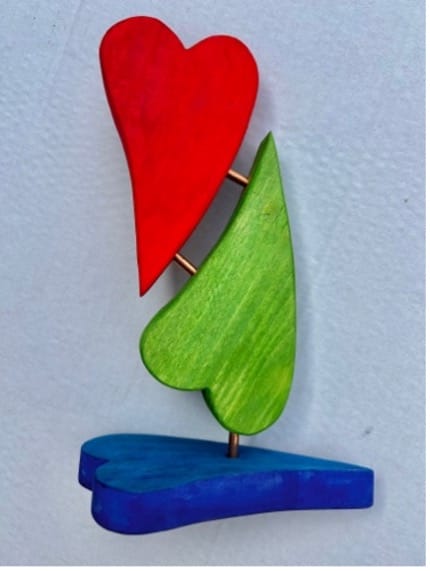
While walking the island recently a fellow pilgrim asked a question that really made me think. He asked, what is it that sustains you at this time when Church is so much in decline and faith is in crisis? I immediately answered with a term I had never used or heard used before: the ‘parallel church’ is what keeps hope alive in my heart. He asked me to explain. So, thinking on my feet I replied: Parallel may not be the exact term I need but there are definitely two churches running side by side and only very occasionally meeting. The old institutional model is undoubtedly, in what would appear to be terminal decline. There are lots of resuscitation attempts taking place but few signs of life returning. It would be possible to be so entrenched in that older model and have no awareness of a new kind of church that is fast gathering momentum.
Sat 20th Dec – Awakening
What is this parallel church? It can be clearly seen in the huge numbers who sign up for seminars and retreats who rarely set foot in the church that they have grown up with. Many of them are awakened souls who have graduated from the university of hard knocks. Issues like addiction, marriage break-up, abuse issues, childhood trauma or grief have forced them to embark on a deeper journey to find answers. Their first port of call after awakening is usually the church of their youth but more often than not they come away disappointed having found an archaic language still in use and that what is happening there doesn’t meet where they are at. Most would say they are searching for community and a sense of belonging but have failed to find it in traditional circles. They then become part of an amorphous group of spiritual nomads who gather occasionally in oasis places of spirituality like AA, self-help, yoga, meditation, etc. These are also the ones who flock to the likes of seminars and retreats where for a brief period they experience the essence of Church as the ‘Gathering’ where they belong.
Advent 4th Sunday 21st Dec
It should be quite obvious to everyone at this stage that our older style of Catholicism, as we have known it, and seen it practiced, is not going to survive much longer, and stands radically in need of renewal. Its condition could only be classed as terminal. Church attendance is dropping fast everywhere, priests are becoming an endangered species, and the days of clericalism, and a clerical church, are well and truly over. We now find ourselves in an uncomfortable transitional space where the old is dying fast and the shoots of new life are only just appearing. It’s not anyway clear what a new church is going to look like. The challenge is not to throw out the baby with the bathwater but more to find that baby and rescue him from drowning in what was some very muddy water.
That old religion that we grew up with was far more focused on a code of ethics than spirituality and in particular it went over the top in relation to sexual sins. It also equated moral evil with the breach of man-made rules and regulations. It portrayed a God of fear who was ever ready to punish even the most trivial of offences. How preposterous it was to even suggest that a loving God would send one of his own creations to the eternal fires of damnation for eating meat on Friday or not fasting before going to Holy Communion. Our old-styled Catholicism beyond doubt was a guilt-ridden religion where no one felt good enough. This is something we need to let go of gracefully and be thankful that it is more or less gone.
Any attempt to renew and recover a vibrant faith must bring us back to the Scriptures. If we reflect on the Gospels especially in these Advent times we find something very interesting: That the most persistent command from God is not about sex, breaking of rules or religious observance, but rather about not being afraid. Throughout the Bible the command ‘Do not be afraid’ occurs 366 times. That’s once for every day of the year, and one for a leap year. In the Nativity stories alone it is staggering how many are told not to be afraid – practically every character in the story.
Mary is told by the angel ‘not to be afraid’, that she has found favour with God.
Joseph is told ‘not to be afraid’ to take Mary as his wife.
Zechariah, John the Baptist’s father is told ‘not to be afraid’.
Later he is told God is visiting his people that they might serve him without fear.
On Christmas night the shepherds are also told ‘not to be afraid.’
In each of these cases fear is presented as the biggest and only obstacle that would prevent these good people from carrying out God’s will. And is it not just amazing that no other obstacle is even mentioned. Just contrast that truth with what we grew up with and draw your own conclusions.
Why do you think the Gospels focus on fear so much? It probably holds us back much more than we realize and is the motivation behind much of our actions or our failure to act when we should. Here I’m talking about unhealthy fear and not the kind that makes me keep my mouth shut when I have nothing to say. Fear of failure doesn’t allow us to start something and so compounds our sense of failure. Fear of losing a relationship means that I give in and never stand up for myself but in so doing lose the respect of the other. Fear of speaking our truth means that we live a lie. Fear of rejection makes us people pleasers who can’t say ‘no’. Fear of facing issues from our past, means that we live in the past. Fear of sickness is to be sick, and fear of the future make us live worst possible scenarios that will never happen.
While ‘not to fear’ is a negative Divine command, it is also balanced by the positive command to have faith. In fact, Faith and Fear are presented as polar opposites. To paraphrase just a few:
Have faith and you will be healed and all will be well.
Have faith in God’s providence and you have no need to worry.
Have faith and you can move mountains.
Without faith you can’t please God.
Having faith allowed Peter to walk on water while fear made him sink.
I rather like what a great mystic once said, ‘Faith is what allows God to dream in me, while fear is what allows the devil to give me nightmares.’ Both have a remarkable power to create our reality. Faith expands our world while fear makes it smaller. Faith gives us courage while fear makes us falter. No wonder the dual commands of the Scriptures are ‘not to be afraid’ and ‘to have faith’. Only with the latter can be do the will of God and enjoy the fullness of life that He wants for us.
Mon 22nd Dec – The Edge of the Inside
My place in the Traditional Church all my life has been to comfortably exist on the edge of the inside. That is also to be close to the edge of the outside of a parallel church and while occupying the space in between, to have a leg in both camps. From that space it has been possible to draw from the richness of an ancient faith tradition and present those truths as fresh bread in many unusual settings to people who thought the Church had nothing to offer. On the other hand, it has been possible to draw freshness, enthusiasm and openness from the new and bring that energy into old settings more associated with religious stagnation. What I see so clearly at this stage of my own journey is that as the old is getting smaller the new is growing exponentially. It is possible that the two may never converge but if they do it will be at a point where whatever of the old that had to die will have died, and whatever excesses of the new that have to fall away will have done so. As that gradually happens, the Church will be reborn, but not as we have known it!