TONY FLANNERY WRITING IN THE JOURNAL
Opinion: From control to conversation – how the Christian message meets the modern world. Fr Tony Flannery shares his thoughts on how the messages of the bible can be best understood by readers in 2025.
Link to article: https://www.thejournal.ie/readme/jesus-and-the-church-6790809-Aug2025/
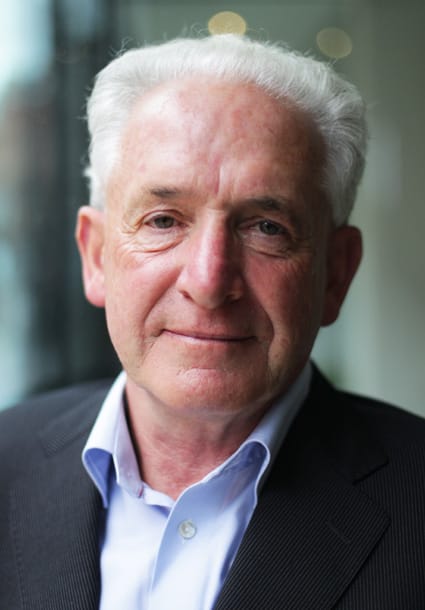
ENORMOUS CHANGE IS happening in our understanding of the message of Jesus, which presents significant challenges for all Christian churches, but maybe most of all the Catholic Church.
For most of its history, the institutional Church kept strict control of its interpretation of the Jesus story and of the dogmatic teaching they derived from it. People who deviated from this teaching were banished, or at other times were put to death.
It was able to do this because the study of these subjects was confined to seminaries and third-level institutes controlled by the Church. Men (women were almost totally excluded) with qualifications in these areas made their livelihood working in Church controlled institutions.
So they had to be careful not to stray from orthodox teaching. If they did, the consequences would be losing their job and their salary, or worse.
But now that has changed. Lay people, including women, are becoming highly qualified in scripture and theology, and are lecturing in institutions that are no longer controlled by the Church. As a result, the tight rein on orthodoxy is no longer possible. New ideas, new approaches, new ways of understanding are emerging on all sides.
Since I was no longer allowed to minister as a priest almost 14 years ago, I have found the freedom to delve into these new writings, and in doing so, my thinking has changed and evolved.
How we understand Jesus
I want to dwell briefly here on two ideas that I think may have a big impact on changing the face of Catholic dogma. The first one is best illustrated for me by the Czech theologian, Tomas Halik. He puts it like this:
All ideas, opinions, writings, even (dare I say it) dogmas are time bound.
What that means is that they are products of their age, with their level of knowledge and understanding. As knowledge and understanding of our life in this world, of humanity in general develop, dogmas and opinions need to be understood and expressed in new ways, ways that speak to the new times people are living in, and the new means of communication.
Another way of making the same point as Halik, but stated more bluntly, was written some years earlier by the French priest, Jean Sullivan:
‘I don’t believe in dogmas; I adhere to that which underlies dogmas and is their source. I mean, I don’t consider the formulation of dogmas as an absolute; they became more of an obstacle than a means a long time ago’.
So, the big question is, can beliefs and dogmas about God, Jesus, human existence and relationships, the universe, and many other fundamental issues, that were declared in the fourth century as dogmas to be believed by all the faithful, speak to the people of today?
I don’t think so. New ways have to be found to present the fundamentals of the Christian faith that make sense in the understanding of today. A big, big task.
The second idea has to do with the Bible and our interpretation of the various books that comprise both the Old and New Testaments. Our understanding of how the bible came into being and how to interpret it is very different now from what it was in the early centuries of the Church.
We now know that the Bible is only partially historical, and is largely made up of story, myth and statements of the faith of the authors, and we have to find new ways of reaching into the meanings contained in it.
One statement that is being increasingly presented by modern biblical writers is the most radical of all:
Jesus was born, lived and died a Jew.
If we start from there, and I find it harder and harder to contradict it, the implications are enormous. It would mean that Jesus had no intention to found a new church, or indeed a priesthood. The historians of the early Church would suggest to us that both these developments happened in the century or two after the death of Jesus, and had more to do with the writings of Paul than the preaching of Jesus. Indeed, Jesus in his lifetime was not known as ‘Christ’, that name was given to him after his death, given to him by Paul.
The Church gradually developed over those first two centuries after Jesus, and was shaped by the early believers, some Jews, but mostly Greeks, Romans and others. It became an exclusive body, outside of which there was no possibility of salvation. This was one of the methods used to spread the Church and to encourage new members to join.
Sadly, in this, it deviated in a big way from what Jesus preached. He spoke about the Kingdom of God, and his portrayal of this ‘Kingdom’ was a way of life that was open to all, irrespective of age, gender, colour, whatever. I have always felt that the Church that our generation grew up in, one that laid down conditions, and emphasised the reality of eternal punishment, would have been abhorrent to Jesus’ idea of the Kingdom.
Our understanding of God is also in need of significant development. The Divine is not a male figure, living in a mansion in the skies, with a tendency to pass judgment.
More than anything else, the Divine Presence is in the realm of mystery, beyond our understanding. I find it hard to see how scholars in the early centuries thought they could actually describe this mystery and make their description into dogmas for all time.
Of course, they couldn’t, and neither can we in our time. But many people speak and write now about a Divine presence in all creation, even seeing it as the energy that began it all and keeps it in existence. Some even suggest that the Divine is present in all creation, including each one of us. That notion appeals to me greatly, the notion of a God in whom we live and move and have our being.
Fr Tony Flannery is a Redemptorist priest who was forbidden to practice by his superiors in Rome in 2012 for speaking up on many issues. This continues to this day. More at TonyFlannery.com.
“So, the big question is, can beliefs and dogmas about God, Jesus, human existence and relationships, the universe, and many other fundamental issues, that were declared in the fourth century as dogmas to be believed by all the faithful, speak to the people of today?”
I asked “Has the Nicene Creed become inaccessible?” in the ITQ in 1981 and now, 44 years later, I am celebrating “Johannine Revelation, Nicene Witness” (https://www.mdpi.com/2077-1444/15/9/1102 ). The Nicene Creed is my favourite prayer and I have never questioned its substance. But people react according to their mood. Some have said, “of course the Creed is obsolete, born of a Greek mindset, and if Christianity had developed in China no one would have come up with such a formula!” and others, terrified of theological hermeneutics, have said, “so you are dumping the Creed!”
The Creed is based chiefly on the Fourth Gospel. The version of 381 expands the article on the Holy Spirit, using what sounds like a highly technical word, “proceeds” (ekporeuetai), which in fact comes straight from John 15:26. The Johannine Trinity is a warm, engaging, dynamic ‘divine milieu,’ and if it were just a myth Christianity would be a very impoverished religion. Some exegetes think that biblical hermeneutics is bound to reduce Jesus to a prophet and to make impossible any talk of a concrete divine revelation. How do we find our way back to the sources of faith?
You have identified my present situation Tony. I am retaining the pearls of my childhood Catholicism where the BIG questions were provided and the answers memorized. Today, as an adult I am struggling to rethink the BIG questions in light of a more complex and nuanced view of the universe. Pierre Teilhard de Chardin pray for us.
Also one’s mindset in praying the Creed (either version) – one’s own ‘take’ on what one is ‘saying’ – makes a huge difference.
The extrapolation of the Creed into a Catechism of 2865 articles and 610 pages has certainly made it appear today simply as a checklist of dogmas, but L.T. Johnson’s ‘The Creed’ makes clear that it was NOT the creation of the Constantinian Church. It was a perfectly logical adaptation of the ‘Shema’, the Jewish statement of faith made by Jesus himself in Mark 12:29-31 – beginning with the trinitarian formula found in the Gospel of Matthew, which was probably complete by the end of the first century.
That those Christians who died in the three Roman persecutions that preceded Constantine would have held to and recited a version of the Creed is made obvious by the Second letter of St Ignatius of Antioch, dated sometime in the second century:
“Stop your ears, therefore, when any one speaks to you at variance with Jesus Christ, who was descended from David, and was also of Mary; who was truly born, and ate and drank. He was truly persecuted under Pontius Pilate; He was truly crucified, and truly died, in the sight of beings in heaven, and on earth, and under the earth. He was also truly raised from the dead, His Father quickening Him, even as after the same manner His Father will so raise up us who believe in Him by Christ Jesus, apart from whom we do not possess the true life. But if, as some that are without God, that is, the unbelieving, say, that He only seemed to suffer (they themselves only seeming to exist), then why am I in bonds? Why do I long to be exposed to the wild beasts? Do I therefore die in vain? Am I not then guilty of falsehood against the Lord?”
To oppose ‘dogma’ and ‘historical truth’ – as though these are necessarily antithetical – is therefore a mistake. Ignatius was clearly stating the vital belief that made his journey to death in Rome (possibly in the Colosseum) meaningful. Are we to suppose that very vulnerable Christians in that early church would never have needed a compact and portable statement of faith, to complement the Shema as a statement of their allegiance to Jesus?
That for Ignatius and others Jesus was indeed ‘the anointed one’ – the Christ, the messiah – is also obvious – and therefore to attribute to St Paul the ‘dogmatic’, ‘time bound’ and often abusive nature of Constantinian Christianity is also simplistic.
Why is it not obvious that the Creed grew originally out of the need of the earliest Christians for a memorisable reassurance of their own faith in Jesus as ‘Victor’ over the Pagan Roman belief system that could at any moment scapegoat them – as it did Ignatius? It therefore can be recited today as a rebuttal of any ideology of the moment – and of the judgementalism of a media-dominated society.
Even Jesus’ instruction ‘follow me’ is a rebuttal of the notion that he never defined a dogma. The problem is not dogma but dogmatism accompanied by robotic recitation of prayers without pause for consideration of what they mean.
We can get nowhere whatever by positing essentially that Christians do not need any shared beliefs. That Jesus also called for unselfish service of others – and therefore for self-sacrifice – is also clear from the Gospels – as is the tradition that this is the essence of Christian ‘priesthood’. Could we please get finally past the notion that Jesus never founded any kind of priesthood either – to be left in the end with only a creedal collection of negatives?
Just to be aware of the derivation of the word ‘priest’ from ‘bridge’ is to be aware that everyone is called to that task – in being called to ‘follow’. It simply doesn’t follow that if Jesus set out to reform Judaism – and many Jews rejected his teaching – he would not have approved the actions of those who tried to obey, and to form a separate community – a ‘church’ – to do that.
Tony, if I as a Traditional Roman Catholic end up excommunicated, and you with your views end up under severe ecclesiastical censure, it is an interesting commentary on the state of the Church.
I wish you well for the future.
Excellent piece, Tony. I have shared with many friends, lay and clerical.
Sean, my clear understanding from what I have read in recent years is that there is now a clear consensus among scholars that (1) Jesus did not ordain anyone at the Last Supper. The Last Supper was not an ordination service as Jesus did not foresee a movement out with his own Jewish faith. Therefore, why would he need priests?
So, (2) Jesus did not intend to establish or set in motion the genesis of another church.
Sean, I wonder did you ever read Garry Wills’ “Why Priests”.
It is such an interesting, fascinating read.
We should all be grateful to Tony for having the courage to say what was until recently the unsayable.
But, in Tony’s own words, quoting the great prophet Kris, “freedom’s just another word for nothing left to lose”.
I was dismayed and a little perplexed when I read in Fr. Tony Flannery’s article in Opinion – The Journal, the phrase “Lay people, including women,”; since when?
However, I welcome the references to Fr. Jean Sulivan (his real name was Joseph Lemarchand) the French priest-writer who took his nom de plume after watching Preston Sturges’ Hollywood comedy, Sullivan’s Travels. See:
https://www.catholicireland.net/coping-with-death-alongside-jean-sulivan/
It is great to know that the writings of Sulivan (one ‘l’) and Msgr. Tomáš Halík the Czech priest and professor of sociology at Charles University, born in Prague in 1948 are being discovered and attracting attention; but surely not for the first time among Irish Catholics?
Halík earned his doctorate in philosophy in 1972. He was later ordained as a priest in the underground Church. Until the fall of Communism in 1989, he was banned from university teaching (not by the Catholic Church) and worked in secret as an advisor to Cardinal František Tomášek, an opponent of the Communist regime. He also worked as a practicing psychotherapist during that time. His books include a memoir, From the Underground Church to Freedom, and several works of theology and philosophy, including Night of the Confessor and Patience with God. His most recent book, The Afternoon of Christianity, like this article, argues for a more mature and open Church.
As all Journal articles are limited by space in what can be said, there is extensive coverage on these two great priests available on Internet sources for anyone wishing to benefit from Fr. Flannery’s introduction to them. One doesn’t have to rush off and buy a load of books!
For myself, in these perplexing times I find a good bed-time read, after a glass of warm milk, is Joseph Cardinal Ratzinger’s Introduction to Christianity (English translation 1969 with new Preface 2000) and his references to Pierre Teilhard de Chardin, S.J., on pages 85; 236-238, 304 and 319, and, who in Laudato Si, specifically (footnote 53) made it in an encyclical.