Brendan Butler: A Rupture in the World Order
This article first appeared in Flashes of Insight.
Link to article: https://flashesinsight.com/2026/03/17/a-rupture-in-the-world-order/
The Canadian Prime Minister, Mark Carney, at the World Economic Forum described the present situation of our planet created by the Trump administration as “a rupture in the world order.”
From a theological perspective this damaging rupture can be interpreted as an inrupture of social sin into the body politic resulting in its further corruption.
Global epidemic of sin
This epidemic of sin which idealizes wrong and perpetuates its effects is further infecting the social fabric of our communities and is being transmitted to following generations through social channels — ad infinitum.
This social sin has as much devastating long-term effect on our moral sensibilities as the Covid epidemic is having on physical human health.
Just as the long-term negative effects of Covid are only now being investigated and identified, there is an equal need to investigate the long-term effects of this epidemic of social sin, particularly on our younger generation.
Original sin and social sin
Traditionally this social sin was interpreted and categorized as “original sin.”
This doctrine has unfortunately concentrated attention onto the biological channels for the transmission of general sinfulness, while neglecting the transmission and perpetuation of specific evils through the channels of generational social communication.
Moral theology, much too often concentrates on personal sin, personal guilt, and repentance and has not given adequate attention to the effects and transmission of the social idealizations of evil.
Four expressions of social sin
Examples of contemporary social sin include:
- Global armed conflicts.
As of 2026 there are over 130 active armed conflicts involving 60 countries, a number that has doubled in the past 15 years.
The latest illegitimate U.S./Israeli attacks on Iran and Lebanon are causing untold human suffering and creating global economic chaos.
- The injustice of income and wealth disparity.
The richest 10% of our planet receive 53% of global income, while the bottom 50% receive only 8%.
It is estimated that 62 billionaires controlled as much wealth as the bottom half of the global population (3.6 billion people).
Extreme inequality disproportionately affects marginalized groups.
- Closing borders on global migration.
Contemporary migration is being shaped by globalization with the movement of 281 million people (3.6% of the world’s population) across borders.
The 43.7 million people fleeing persecution are facing growing hostility, racism, xenophobia, and closed borders by richer nations.
- Misogynistic structures in all our societies, whether political or religious, perpetuate and justify gender discrimination in all its pernicious forms.
These four expressions of social sin — armed conflict, wealth disparity, closed borders, and misogynistic structures — are not isolated failures. They are interconnected symptoms of a deeper moral disorder that is reshaping the fabric of our societies and the conscience of our age.
Need for action
There is a need for awareness and social action against the increasing and unprecedented rupture not just of the world order but the subversion of our moral order, where military might has subverted moral right, lies are presented and increasingly accepted as the new “truth,” and social discrimination in all its forms shows signs of increase.
This contemporary corruption of society should be seen as a result of social sin seeping into the moral fiber of our society and becoming embedded as structural sin.
The question this raises is not merely academic. If social sin is structural, then the response must also be structural — public, organised, and sustained.
Ethical and religious bodies need to publicly counteract this creeping moral malaise.
Most importantly, we, as Gospel witnesses, must awaken to our mission as visible fearless social proclaimers of the values of the Kindom of God as proclaimed by Jesus the Christ.
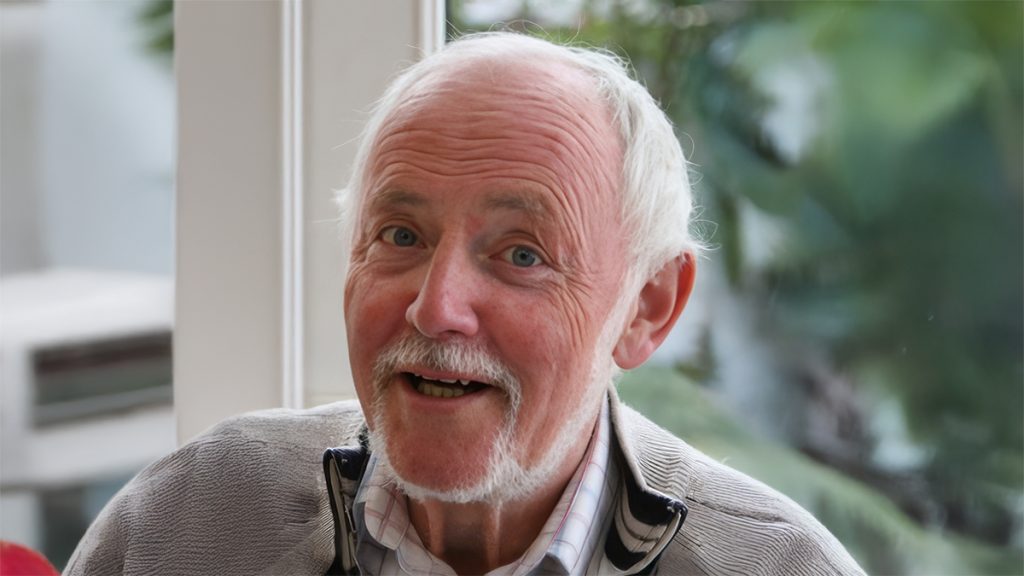
- Brendan Butler is a former secondary school teacher who specialised in teaching Religious Education. His postgraduate degree was in theology from the Antonianum University in Rome. In 1979, he co-founded “The Irish El Salvador Support Committee” and later “The Ireland Algeria Solidarity Group”. He was the co-ordinator of “The N.G.O. Peace Alliance” which was active in the Irish peace movement. He helped to revive the Catholic Church reform movement “We are Church Ireland”, of which he was joint co-ordinator and spokesperson for several years.
- He published: My Story by Jesus of Nazareth, As narrated by Brendan Butler.
- Brendan is also active in contributing articles, letters to Irish Newspapers on Church and human rights issues.
“If social sin is structural, then the response must also be structural — public, organised, and sustained.”
I find it very difficult to discern exactly what is envisaged here, other than just another political ideology and party – and how this might relate to ‘conversion’ – the call to repentance.
Every social structure consists of individuals who truly only have the power to change themselves, helped by God’s grace. Wouldn’t ‘structures’ necessarily change if the individuals who belonged to them simply agreed to obey the Great Commandments? (I’m thinking of e.g. the Roman centurion here, and e.g. Nicodemus.)
I honestly don’t see any other way of going about this, Brendan, because politics has always to be about the getting of power, which always turns into the same old same old of bickering and blathering and self-promotion. Can politics or ‘structures’ ever change without, first of all, deep conversion at the level of the individual?