
KIERAN O’MAHONY OSA
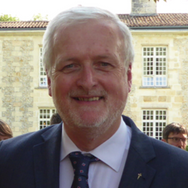
Kieran O’Mahony osa died this morning in the Hospice, at Harold’s Cross, Dublin. Kieran was 75 and a very energetic young man! He was very healthy and his bike took him on many a long trip. There is almost a sense of abandonment in his going. I incline always to say – some resentment that he has gone. He had so much to give and gave so much. He fitted the oft-used phrase: A Renaissance man. He seemed to have all the gifts. He was a Scripture Scholar. He was immersed in History; in Liturgy; in Music; in Archeology. He could also cook rather well! He was an excellent lecturer who spoke with clarify, and with an ability to make connections with life; with politics; with current affairs. He gave a context to everything.
A real Scripture scholar is not someone who knows the Scriptural background but rather one who can remove the layers and let the Word speak. Much of what many of us do is too simplistic. Myth and Metaphor. Parable and prophetic gesture. The world of the past came alive through Kieran. There is was nothing fundamentalist in his approach. He wasn’t ever intimidated by the Bible. He had the languages. He had read ‘everything’ and ‘everyone.’ He made sense of it all and then his applied theology burst forth. He was such a blessing. We (as ministers) are supposedly people who apply theology and let the Word become Flesh.
He came out here to Finglas on a regular basis. He took us through whatever was our chosen topic. John. Paul. Acts. The Prophets. The psalms. Isaiah. Or the Gospels for that year. Or the Readings for the weekends. Whatever and whichever we wanted. He spoke. We were mesmerized. The Word came alive. He was asked questions. Many of those questions came from people who wouldn’t be overfamiliar with the Bible. He treated every question with respect, and entered into the world of Finglas and of the person. It was very special. On one occasion, I told John Byrne osa (who worked with Kieran out of Orlagh) how good Kieran was here among us. I told him of the ease which everyone felt in listening and learning and asking questions. John replied: “Kieran learned so much from the people of Finglas.” That was a delightful surprise to hear. I had felt sometimes that Kieran was so learned that our rather simple questions might irritate the ‘Professor’!
The example that whirls around in my head comes from The Deserted Village by Oliver Goldsmith. The lines/comments on the village schoolmaster: “And still their wonder grew, that one small head could carry all he knew.” This was so true. My wonder grew too, that some of us had spent so much time in education, and had emerged (almost unlearned) with rather less ability to make FAITH take root in the everyday and the ordinary. Kieran could and did.
Kieran too was very searching and restless in his questions on how Liturgy could be and might be celebrated. He was a critical observer too of what was being given in many a Church! He felt so often that Scripture was misused and misunderstood. He was very strong too on the reasoning in Church thinking in regards to Priesthood. He could find no basis in Scripture for not ordaining women as Deacons and Priests.
We so much needed Kieran to stay with us. But our ways are not God’s ways. He lived well. He died well. He inspired us. He was a great gift among us. He reached out across the world with his Scripture journeys; with his lectures online; with his presence in the Archdiocese of Dublin. In fact, I was always sad when that role ended a few years ago. Kieran had more to do and more to teach all of us. Bless him and Thanks be to God for him. His dying too was an inspiration. His leaving of us challenges us in some little way, to take on the baton in the relay race of faith. May he rest in peace.
Seamus Ahearne osa
18 August 2026.
Church in Ireland is massively impoverished without Kieran and his vision. So sad and especially with prostate cancer and all the advances in treatment.
I am very sorry to hear of the death of Kieran O’Mahony. Thank you Seamus for letting us know and putting into words Kieran’s ministry and rich contribution. My condolences to his family, fellow Augustinians and very many friends who will miss him very much indeed. May Kieran rest in peace, his earthly labour completed.
And may the seeds he has planted bear fruit.
Though I never met him, Kieran was an inspiration, and a great support to me. I will miss him greatly.
Goldsmith’s schoolmaster’s head fits comfortably on your shoulders, Séamus.
I am truly shocked to hear this, as I had not even known he was ill. My mental image was indeed of a hale, hearty and energetic person. This is indeed a sad change to the landscape for all of us.
There was genuine grief in this house this morning. Kieran was the priest who ticked my every box. Fiona and I loved Kieran for his wonderful erudition and his gentle nature.
We so much needed Kieran to stay with us, how true, Seamus.
He came and spoke at our Edinburgh Newman last year in May on the topic of the early church and the plan was that he was coming back this month.
Kieran had such incredible knowledge and, most importantly, the courage, bravery even, not to be cowed by the institution to keep his truth under lock and key.
I only became aware of Kieran when that famous letter appeared in the Tablet and I thank God I got to know him as a friend and inspiration.
I just heard the news. Shocked as he was such a big strong man in so many ways. He will be sorely missed.
Two Letters of Kieran O’Mahony to the Tablet on Women in the Church
Has the Holy Father made a mistake in not permitting the ordination of women, even initially only to the diaconate? The exclusion of women from ministry can be traced not only to tradition but also to an erroneous reading of the evolution of “church” and its ministries. In common with many other biblical scholars, I would affirm the following.
Firstly, the historical Jesus encountered very few non-Jews. His ministry was “to the lost sheep of the house of Israel”. Jesus did not foresee a separate religious movement, later given the name Christianity. Much less did he foresee a Church (the term is found in the Gospels in Matthew alone), with specific structures and ministries. In the New Testament, varieties of ministries are indeed evident, in particular in Paul, Matthew and Luke-Acts. Towards the end of the first century, these settled into servants, elders and overseers (the later deacons, priests and bishops).
The Council of Trent, in affirming that all seven sacraments were somehow instituted by Jesus, made the mistake of accepting the way the Reformers posed the question. This was unnecessary (though understandable in pre-critical times) and brings with it insurmountable historical difficulties. If the above is substantially accurate, then the historical Jesus “ordained” nobody at all and the Last Supper was not an ordination service, simply because the historical Jesus did not reckon with a body separate from his own Jewish faith.
As a result, the argument from the Last Supper that only men can be ordained makes no sense. What we have inherited, across the Christian centuries, is the Spirit-guided tradition, reflecting a graced evolution. There is no reason to think that the Holy Spirit has stopped guiding us in these critical times. Listen to what the Spirit is saying to the Churches!”
(DR) KIERAN J. O’MAHONY OSA BIBLICAL STUDIES COORDINATOR, HOLY CROSS DIOCESAN CENTRE, DUBLIN, IRELAND”
Published in The Tablet 17 Jan 2026
Dear editor,
Closed doors sometimes do not quite shut as intended and this is the case with the recent report of the Third Commission on the possibility of women deacons (Synthesis 04.12.2025).
The authors, with integrity, recognise that to exclude women because Jesus was a male is in tension with two key biblical texts. The first is Genesis 1:27 and the second Galatians 3:28. These are not random proof texts but rather foundational for any biblical anthropology. All human beings without distinction are made in the image and likeness of God. The biblical God is gendered, of course, but God has no gender. The teaching of Paul is that there is neither Jew nor Greek, slave nor free, male nor female. All are children of God in Christ, without distinction (Romans 3:22; 10:12). Jesus, of course, is gendered but when it comes to salvation, it is not his maleness which matters but his humanity. This is apparent from John 1:14. The writer could have written “the Word became male (anēr)” or even “the Word became man (anthrōpos)” but he chose “the Word became flesh (sarx)”, the most generic description. The gender of Jesus is of no significance to the writer of the Fourth Gospel. What is of saving significance is that the Word became human.
The writers of the report also note, again with integrity, that the issue of ordaining women as deacons cannot be resolved from a purely historical perspective. The sparse and sporadic precedents are of little help here. The question is properly theological. This means the ball has landed in the court of the Magisterium. On the basis of biblical teaching sketched above, it seems more than unsafe to say that a baptised woman cannot represent Jesus. Any setting aside of the biblical teaching would undercut the common understanding of baptism, a foundational sacrament for being Christian in the first place.
Imagine for a moment that women were admitted to the diaconate. What would change? No core doctrine of the Christian faith would be touched: God, Trinity, creation, incarnation, salvation, the gift of the Holy Spirit, even the sacraments, not to mention prayer and spirituality. The social doctrine of the church would gain in credibility. The liturgy and preaching would be enriched by the experience, worldview and wisdom of women. It would be a very beautiful example of the development of doctrine, as proposed by John Henry Newman, now a Doctor of the Church.
Finally, the Council of Jerusalem in Acts 15 is illuminating. In the absence of any teaching from Jesus himself regarding circumcision and the dietary laws, those present took four steps. Firstly, they noticed where the Holy Spirit was ahead of them (Acts 10:1-11:18). Then, they listened to the variety of opinions (Acts 15:7). Not least, they went back to the scriptures (Acts 15:15-18). Eventually they made up their own minds and a new, quite liberal decision emerged (Acts 15:19-20, 28-29). Our current situation is not unlike that. In the absence of any teaching from Jesus on the matter of who may be ordained, why not notice where the Spirit is ahead of us? Why not listen to everyone, in synodal fashion? Why not return to the scriptures? Why not make a new and creative decision?
Let the tennis-loving Leo XIV pick up the ball in his court and serve!
Dr Kieran J. O’Mahony OSA
Thanks, Liamy for sharing those two important letters of Kieran.
I wonder could someone remind us when the first was published in the Tablet. I don’t remember but it was then I first became aware of Kieran and realised this is somebody really special.
I didn’t understand what the ‘insurmountable historical difficulties’ meant so Seamus then introduced me to Kieran and all was then explained. It was quite simple really.
The last time we saw Kieran was last November when Fiona and I visited him in Dublin and I always wanted to ask him would he have written that letter if JPII and Ratzinger were still in power in Rome.
He said he would because it’s the truth and most scholars now hold it to be so.
How we will all miss him.
Very saddened to hear of Kieran’s passing. A very good man whose contribution will be greatly missed not only in Ireland. He certainly touched our hearts and opened the scriptures in a wonderful authentic way.
I am so sorry to hear about Fr Kieran’s death. My friend Teresa Clarke (Finglas) told me when we were speaking earlier. I met Fr Kieran with my late husband, Michael O’Regan (Cork city) when we used to go to visit Nicholas OSA in John’s lane in Dublin.
Where I live in Co Leitrim, I often see passages in print in our local parish bulletin from Fr Kieran.
My sincere condolences to you Fr Seamus and to the Augustinian province and to all Fr Kieran’s family and friends. May he rest in peace in the arms of Our Lord 💖🙏✝️
RIP Kieran .. you were so generous in sharing your thoughts-insights and spiritual love of scripture with us all. May your goods deeds go before you. ✝️